
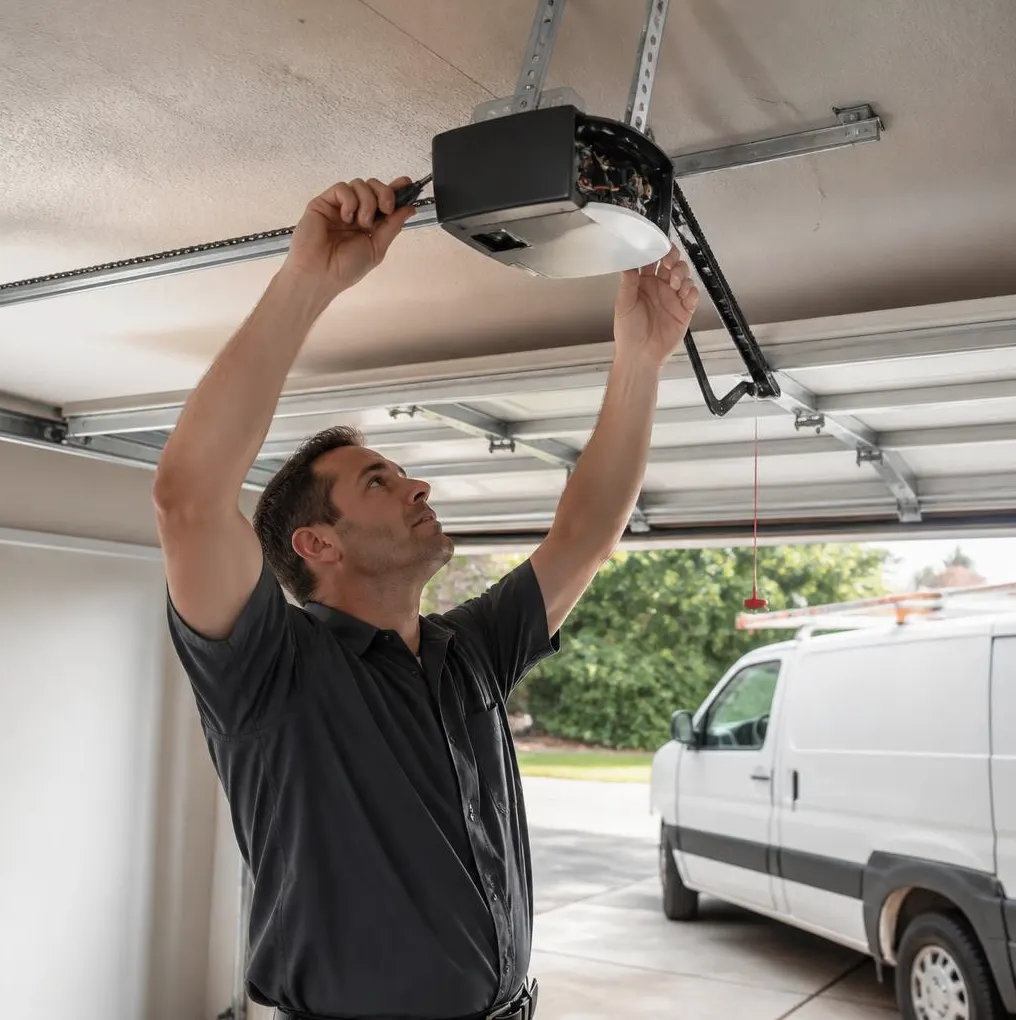
What a Technician Sees on These Calls
A typical call starts with something small: a remote that chirps twice before the door moves, or a door that seems to 'hesitate' before reversing. But while we're in the driveway, we often notice the real issue standing a few feet away — a toddler's bike leaned against the track, a dog bed set up just inside the garage door's path, or a garage remote clipped to a stroller handle at exactly the height a curious three-year-old can reach. The mechanical complaint is rarely the only problem. In homes with kids and pets, garage doors get tested, climbed on, driven under, and treated like a wall that happens to move — and the safety systems built to catch a mistake are often the parts that have been quietly failing for months.
What Actually Goes Wrong
Most garage door incidents involving children or pets trace back to one of a handful of failures, often stacked on top of each other:
- Misaligned or blocked photo-eye sensors. These are the two small sensors mounted a few inches off the floor on either side of the track. A stray bike, a snow shovel, road salt residue, or even a bump during a driveway game can knock them out of alignment. When they're misaligned, the door won't reverse if something — or someone — is in its path.
- No functioning auto-reverse at all. Many homes in this area still have original doors and openers from decades past. Older units installed before auto-reverse became standard may never have had this safety feature, or it may have failed silently over time.
- Springs that are worn or mismatched to the door's weight. When springs lose tension, the door doesn't lower smoothly — it drops. A door that free-falls the last foot or two is far more dangerous to a pet darting underneath than one that lowers at a controlled pace.
- Remotes and keypads within a child's reach. Clipped to a stroller, left on a low shelf, or coded with an obvious sequence, these turn a 150–400 pound moving door into something a toddler can operate without understanding what it does.
- Pinch points on older panel designs. Original doors, especially ones with simple flat-panel sections, don't have the pinch-resistant edges built into most doors sold today. Fingers and paws find these seams.
How Bad It Actually Gets
These aren't hypothetical edge cases. A door that fails to reverse against an object can cause real crush injuries to small hands, fingers, or a pet's tail or paw. A door that drops suddenly because of a failed spring can strike a child or animal with enough force to cause serious injury. And because garage doors are heavy, slow-moving, and easy to tune out as background noise, kids and pets often don't register the danger until the door is already closing on them. The scary part is how quietly these systems fail — a sensor can be out of alignment for weeks with no visible sign, until the one time it matters.
The Specific Actions That Prevent It
Test the safety reverse monthly
- Place a roll of paper towels or a 2x4 flat on the ground in the door's path, then trigger the door to close. It should reverse immediately on contact.
- Separately, close the door and wave a broom handle through the photo-eye beam path without touching the door. It should stop and reverse.
If either test fails, stop using the opener until it's repaired. This isn't a wait-and-see item.
Keep the photo-eyes clear and aligned
Check that both sensor lenses are clean, pointed directly at each other, and mounted at a consistent height on both sides. In winter, road salt spray and slush buildup on the lenses are common culprits for intermittent failures — wipe them down as part of regular garage upkeep.
Control who can operate the door
Store wall-mounted remotes above counter height, assign keypad codes that aren't birthdays or house numbers, and if your opener supports it, use scheduling or a child-lock feature that limits when the door can be triggered without an adult present.
Set a household rule and keep it
The door is not a game. No racing bikes or pets under a closing door, no treating the opener as a toy. This sounds obvious, but it's the rule most often broken in the households we visit.
Know your door's age and design
If your home still has its original door from decades ago, it may lack both modern auto-reverse sensors and pinch-resistant panel edges. Retrofitting sensors is usually straightforward; upgrading panel design typically means replacement, which is worth weighing against ongoing safety risk, especially in a house with young kids or pets still learning the rules.
When to Call Chatham Garage Door
If your auto-reverse test fails, your sensors won't hold alignment, or your door feels heavier or faster than it should when closing, don't wait for a near-miss to find out why. We handle Opener Repair & Installation to fix or replace failing safety sensors and auto-reverse systems, and our Garage Door Maintenance visits include a full safety check — spring tension, sensor alignment, and pinch-point condition — so you know exactly what you're dealing with before winter's freeze-thaw cycles add more strain to an already tired door.
If you're in Chatham, Madison, Summit, or anywhere nearby in Morris County and want a straightforward safety check on your garage door, call Chatham Garage Door. We'll tell you honestly what needs attention and what can wait.