
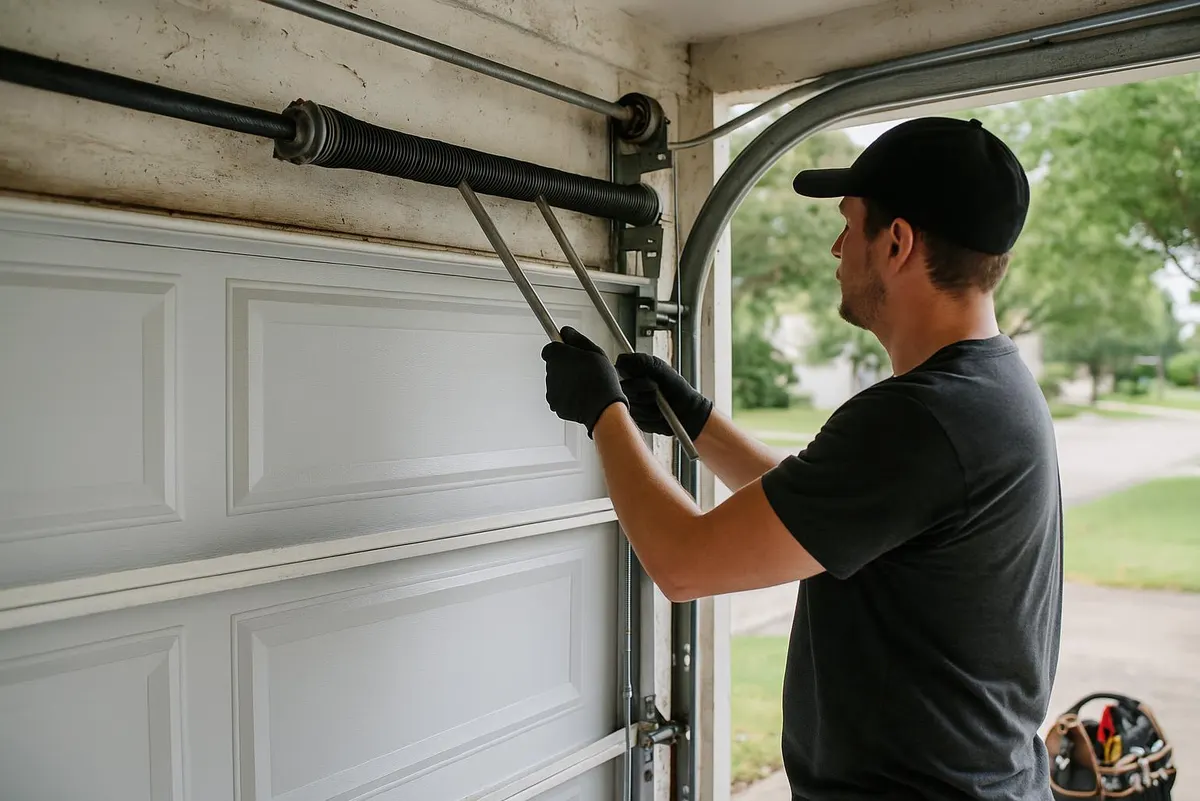
The Moment You Notice Something's Off
It usually starts small. You hit the button and the door doesn't glide anymore — it catches, hesitates, then jerks forward with a metallic scrape. Or maybe you walk past the garage and notice the door isn't sitting flush against the frame on one side, leaving a sliver of daylight where there shouldn't be one. Sometimes it's a roller popping loose from the track with a sharp clack, or the safety sensors refusing to let the door close because it's no longer tracking straight. None of these are things to ignore. A door running on a bent or misaligned track is working against itself every time it opens, and the damage tends to accelerate once it starts.
Symptoms Worth Paying Attention To
- Grinding or scraping sounds as the rollers pass a specific point in the track, rather than smooth, even motion
- Visible gap between the door panel and the frame on one side when closed
- Door hangs crooked or looks tilted when it's partway open
- Rollers jumping out of the track, especially near the bottom section
- Jerky or inconsistent movement, with the door speeding up or slowing down unevenly
- Door reverses unexpectedly because the misalignment is triggering the safety sensors
If you're seeing more than one of these at once, the track has likely already shifted out of true, not just loosened.
What a Technician Checks First: Physical Impact
The most common cause is also the most obvious once you look for it: something hit the track. A car bumper nudging too far forward, a bike or ladder leaned against it, a stray basketball — any of these can crimp a vertical track just enough to throw off the roller path. A bent section is usually visible as a kink or flat spot if you sight down the length of the track. Minor bends can sometimes be hammered back into shape, but if the metal has creased or cracked, that section needs to be replaced rather than reshaped, since a weakened track can fail under the door's weight.
Loose Brackets and Fasteners
Next, a technician checks the bolts and brackets holding the track to the frame. Garage doors cycle thousands of times a year, and that vibration gradually works fasteners loose — a process that speeds up in houses with original framing that's shifted slightly over the decades. Loose brackets let the track flex side to side instead of staying rigid, which throws the rollers off their path even without any visible bend. The fix here is straightforward: re-tightening or replacing hardware and re-shimming the bracket so the track sits plumb against the frame.
Structural Shift in the Garage Itself
Older homes in this area often have garages that have settled unevenly over time, and freeze-thaw cycles in the ground don't help — the frost heave that happens every winter can nudge a foundation or door frame just enough to pull a track out of square. This shows up as a gradual, consistent lean rather than a sudden kink. Correcting it usually means loosening the track from the frame entirely and re-hanging it with a level, sometimes with new shims to compensate for a frame that's no longer perfectly square.
Ice, Salt, and Winter Debris
During icy stretches, snowmelt from vehicles and boots can refreeze along the base of the track, and road salt tracked in on tires accelerates corrosion on the metal. Ice buildup can physically push a track out of alignment, and corrosion weakens the mounting points over time. Clearing ice before it hardens and rinsing accumulated salt residue off the lower track sections helps slow this down.
Worn Rollers Putting Uneven Pressure on the Track
Last, a technician checks the rollers themselves. Old, worn, or cracked rollers no longer sit evenly in the channel, which puts uneven side pressure on the track every cycle and can bow it outward over months of use. Replacing worn rollers with new nylon or steel rollers often resolves alignment issues that seemed to be a track problem at first glance.
When to Call Chatham Garage Door
If your door is scraping, hanging crooked, or dropping rollers, it's time for a proper inspection rather than a DIY hammer-and-hope fix — a misjudged adjustment can put the door under enough tension to cause real injury. Chatham Garage Door handles both garage door repair and garage door maintenance for homes throughout Chatham, Madison, Summit, and the surrounding Morris County area, and can diagnose whether you're looking at a bracket adjustment, a track replacement, or a roller swap.
If your garage door in Chatham, NJ is rubbing, sticking, or hanging crooked, call Chatham Garage Door for a fast, honest assessment before the problem gets worse.