
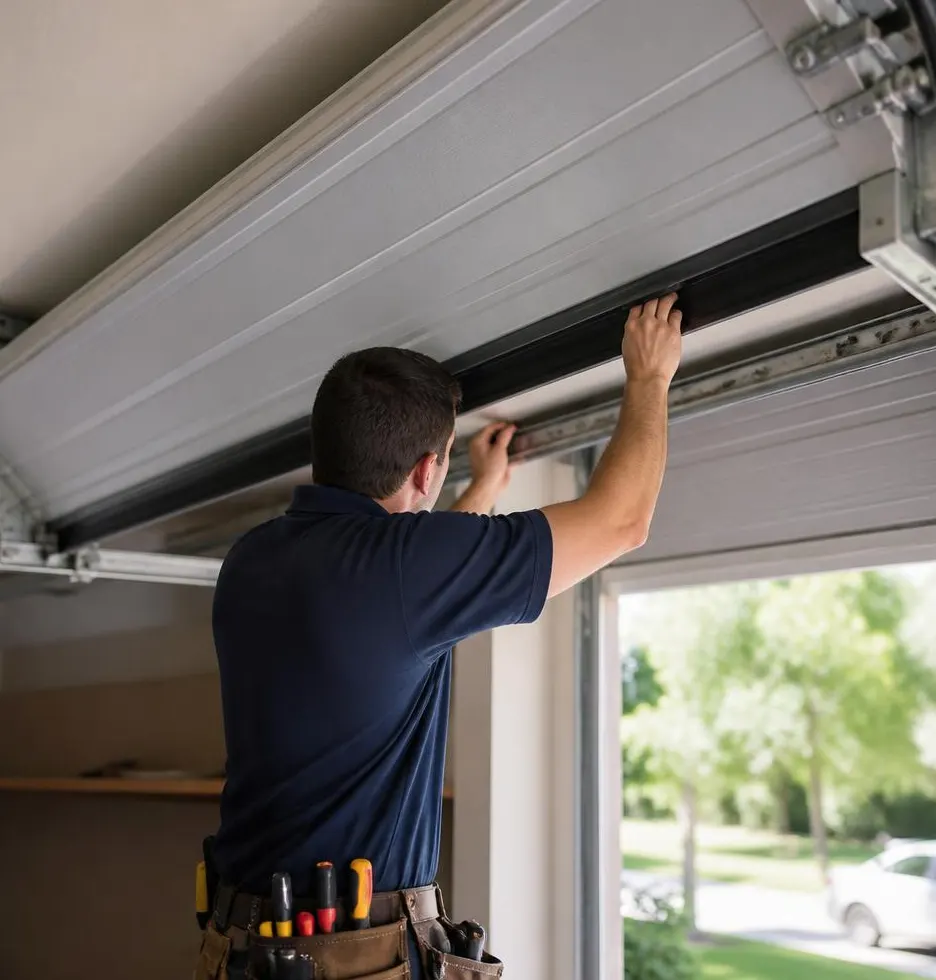
What Skipping Winter Prep Actually Costs You
Put this off until January and you're not looking at a minor inconvenience. You're looking at a door frozen shut to the slab at 6 a.m. before work, a torsion spring that snaps in freezing temperatures and strands your car inside, or an opener motor straining so hard against stiff, cold-thickened grease that it burns out the gear assembly. Add in a few months of rock salt and de-icer tracked in on tires and boots, and unprotected hardware starts corroding from the inside out. None of this is dramatic until the morning it is, usually during the first real cold snap or the first storm of the season, when every other garage door company in Morris County is also slammed with emergency calls.
Why This Part of New Jersey Is Hard on Garage Doors
Winters here aren't just cold, they're a cycle: freeze, thaw, refreeze, salt, repeat. That freeze-thaw pattern is brutal on weatherstripping, which hardens and cracks in the cold, then lets meltwater seep underneath and refreeze into a literal ice seal at the bottom of the door. A lot of the housing stock in Chatham and the surrounding towns still has original garage doors and hardware from decades ago, built before insulation and sealing were standard. Those original doors tend to have thinner panels, older tracks, and springs that have already absorbed years of temperature swings, which means they're closer to the end of their service life right when winter stress peaks.
Cold Makes Springs More Likely to Break
Torsion springs lose some flexibility in cold weather. Metal contracts, lubricant inside the coils thickens, and a spring that's already fatigued from years of cycling can snap under the added strain of a 20-degree morning. This is why broken springs spike every winter, not just here but anywhere with real cold. If your spring looks stretched, has visible rust, or the door has felt heavier or less smooth over the past few months, don't wait for the first freeze to find out it's failing.
The Pre-Winter Checklist
None of this requires special tools, but it does require actually doing it before the cold arrives, not during the first storm.
- Replace cracked or flattened weatherstripping. The rubber seal along the bottom of the door and around the frame is your first defense against ice, meltwater, and wind-driven cold. If it's brittle, split, or compressed flat, it's not sealing anything.
- Lubricate hinges, rollers, and the torsion spring with a cold-weather-rated garage door lubricant, not household oil or WD-40, which thins out and doesn't hold up in freezing temperatures. A silicone-based or lithium grease made for garage doors will keep moving parts from stiffening up.
- Check the door balance. Disconnect the opener, lift the door halfway by hand, and let go. It should stay roughly in place. If it drifts down or slams up, the springs are out of balance and working harder than they should, which matters more once cold weather adds strain.
- Test the auto-reverse safety sensors. Cold doesn't cause this directly, but a door that's already slightly misaligned from a summer of humidity and expansion can throw sensors off, and you want that caught now, not during a snowstorm when the door needs to work reliably every time.
- Clear and lubricate the tracks, especially if salt or de-icing chemicals have been tracked in from the driveway. Corrosion builds up in tracks and hardware over a winter if it's not wiped down periodically.
- Inspect panels on older doors for gaps, rust spots, or warping, particularly if the door is original to the house. A small gap that seemed harmless in August becomes a path for ice and cold air once temperatures drop.
- Check the opener's battery backup, if it has one. Power outages are common during winter storms, and a dead backup battery means a manually operated door at the worst possible time.
The Trade-Off Worth Knowing
You can do most of this yourself with an afternoon and a tube of the right lubricant, and that's genuinely worth doing. But balance checks and spring inspections carry real risk if you're not experienced with torsion systems, these springs are under enormous tension and a mistake can cause injury. The honest trade-off is: handle the weatherstripping, lubrication, and visual inspection yourself, and leave spring tension, balance adjustment, and anything involving disassembly to someone who does it professionally.
When to Call Chatham Garage Door
If your door feels heavier than it used to, if you hear grinding or popping when it opens, or if you can see visible wear, rust, or stretching on the spring, that's the time to call before winter, not after a failure. Our Garage Door Maintenance service covers the balance check, lubrication, and hardware inspection that most homeowners can't safely do themselves, and if a spring is already showing its age, our Spring Replacement service gets it swapped out on your schedule instead of during an emergency at 7 a.m. in the cold. And if you do end up with a door that won't open during a storm, our Emergency Garage Door Service is built exactly for that call.
If you're in Chatham, Madison, Summit, New Providence, Florham Park, Short Hills, Millburn, or Livingston and want your garage door checked before the cold really sets in, give Chatham Garage Door a call. A quick inspection now is a lot cheaper than a broken spring or a stuck door in January.